Home / Health Insurance / Articles / Individual Health Insurance / Eligibility Criteria for Individual Health Insurance in India
Eligibility Criteria for Individual Health Insurance in India
Roocha KanadeDec 11, 2025
Share Post
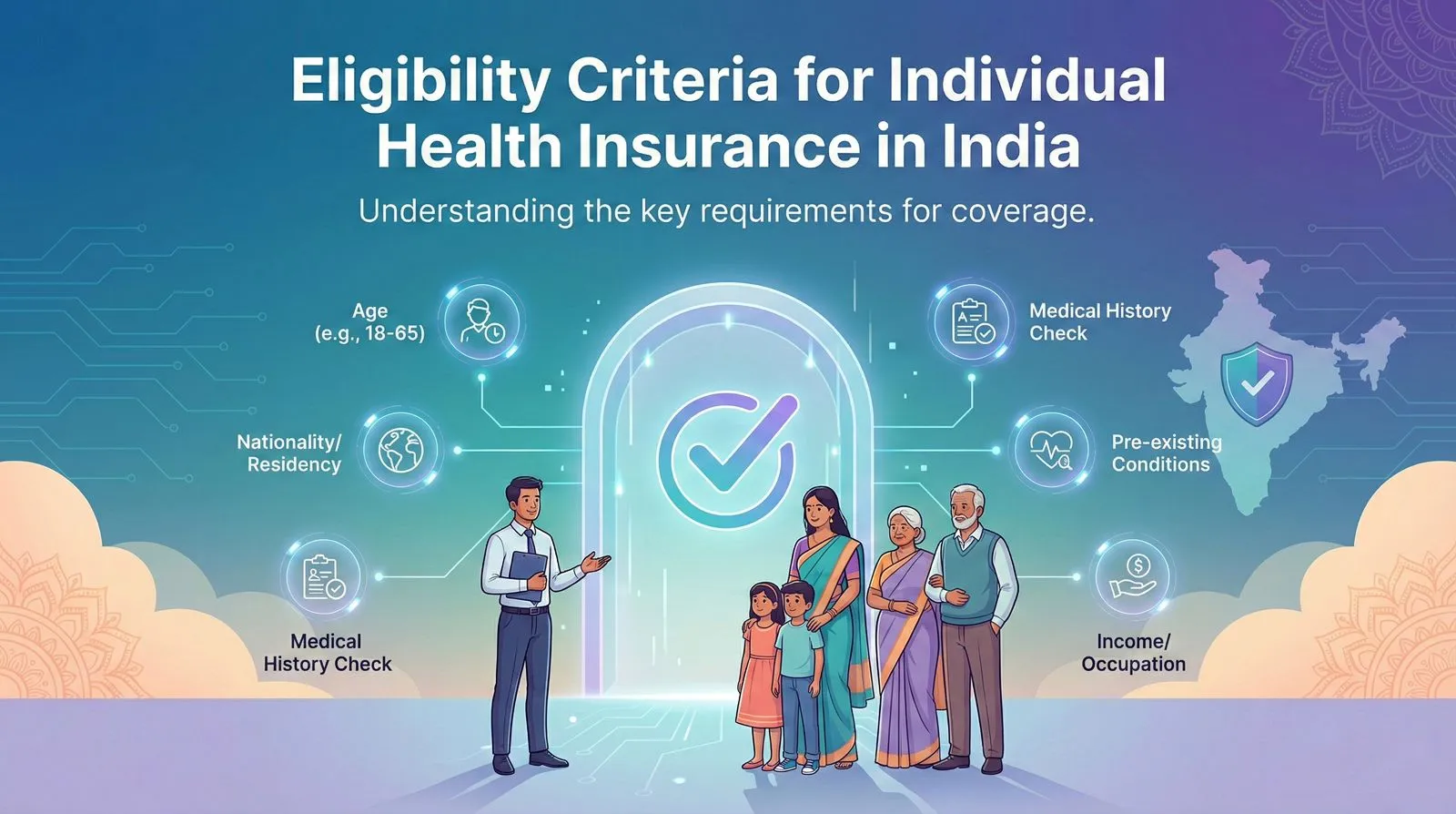
Buying health insurance is an important decision, and understanding the eligibility criteria is the first step. Eligibility is a basic first check for insurance companies so that they can offer the most relevant health insurance coverage. Some common factors include medical history, age, any pre-existing conditions, etc. Some insurers may only check these basic things, while others would have strict rules. Let’s understand the key eligibility requirements before you buy your individual health insurance plan.
Contents

- Why Eligibility Matters in Individual Health Insurance
- Minimum and Maximum Age Limits for Individual Health Insurance
- Medical Conditions and Pre-Existing Diseases
- Documentation Required for Health Insurance Eligibility
- Lifestyle Factors and Eligibility Assessment
- Waiting Periods and Policy Acceptance Conditions
- How to Improve Your Eligibility for Individual Health Insurance
- Conclusion
- Frequently asked questions
Why Eligibility Matters in Individual Health Insurance
Eligibility plays a big role in helping insurers understand your overall health and the related risks. This is the first step of the approval process for any insurance company. Different companies have different rules when it comes to checking the eligibility. This helps them decide if they can approve your health insurance application or not. Note that, eligibility is not related to premiums or claim settlement. It is simply a way for insurers to check whether you qualify for the cover you want.
When you meet the required criteria and share accurate information, the approval process moves faster and with fewer back-and-forth conversations. It also helps you avoid delays that may come from missing documents or undisclosed medical conditions.
Minimum and Maximum Age Limits for Individual Health Insurance
Age is probably the most important factor when reviewing your health insurance application. Most individual health plans allow people between the ages of 18 to 65 years to buy the plan. Older individuals can also apply for health insurance as per the new IRDAI rules. Additionally, children can also be covered under health insurance depending on the type of health plan and the terms of the insurance company. Most companies allow coverage from 90 days for babies.
As you grow older, insurers may ask for additional medical tests to understand your health better. These checks help them assess existing risks and plan your coverage accordingly. Young buyers usually experience a smoother process because they are less likely to have health complications.
Medical Conditions and Pre-Existing Diseases
The medical history of the applicant is the next factor that insurance companies look at when reviewing the application. This includes any past illnesses, surgeries, medical conditions, etc. These things can be checked by reviewing test reports, hospitalisation records, ECG reports, etc. The insurer will then determine if you fall in a high-risk category or not.
Having a pre-existing disease does not mean your application will be rejected. It simply means the insurer may place a waiting period or request additional health details before confirming your policy. Some conditions may lead to a short waiting period, while others may have a longer one.
Documentation Required for Health Insurance Eligibility
Most documents needed for health insurance are quite standard. Insurers ask for these to verify your age, identity, and medical background. You may be asked for the following.
Identity proof such as Aadhaar, PAN, or Passport
Age proof
Address proof
Medical reports if you underwent any tests recently
Photographs or e-KYC details in some cases
The online application process usually makes this simple since many details can be uploaded digitally.
Also read: How to Enroll in Individual Health Insurance: Step-by-Step Guide
Lifestyle Factors and Eligibility Assessment
Your lifestyle habits will mostly help in deciding how much premium you will be paying for the health plan. Habits like smoking, alcohol consumption, etc. can influence the premium. Your BMI could also be taken into consideration.
Example: Rahul, a 30-year-old smoker with a high BMI may pay more health insurance premium as compared to 35-year-old Mira who does not smoke and has a BMI within the advised range.
Note, these lifestyle habits must be honestly shared with your insurance company. Otherwise, your claim might get rejected in the future.
Waiting Periods and Policy Acceptance Conditions
Waiting periods are an important part of eligibility and apply to most health insurance plans. Here are some things that you need to know.
Pre-existing conditions usually come with a waiting period of two to four years. Coverage for those conditions begins only after this period ends.
Your policy is active during the waiting period, but specific conditions become payable only after the waiting time is over.
These waiting periods are not claim restrictions. They are standard rules that help insurers manage long-term health risks.
Different plans may follow different waiting period timelines, so it helps to read the policy wording carefully before buying.
How to Improve Your Eligibility for Individual Health Insurance
Here are a few practical steps that can make your approval process smoother.
Apply when you are younger, because insurers usually find it easier to assess applicants with fewer health issues.
Stay active and maintain a healthy lifestyle. Even small habits like regular walks or balanced meals make a difference over time.
Keep your medical records updated so you can share accurate details whenever needed.
Be completely honest while filling out your proposal form. Clear disclosures reduce delays and help insurers match you with the right plan.
Renew your existing policy on time. Continuous coverage signals that you have been a responsible policyholder.
A small reminder: good health and an early application usually improve both eligibility and long-term affordability.
Conclusion
It becomes easier to choose the right plan once you understand how age, health, lifestyle habits, and documentation affect your eligibility. These checks are designed to match you with a policy that genuinely supports your needs. Share complete information, plan early, and explore related topics like coverage and benefits to make a confident decision.
Frequently asked questions
Here are common questions on Eligibility Criteria for Individual Health Insurance in India

What is the minimum age to buy individual health insurance?
Most plans start at 18 years for adults, but some allow children above 90 days to be covered.
Do I need a medical test to get health insurance?
It depends on your age, medical history, and the insurer’s guidelines. Older applicants or those with certain conditions may need a test.
Can I get health insurance if I have pre-existing conditions?
Yes, you can. Pre-existing diseases usually come with a waiting period, not an automatic rejection.
What documents are needed for health insurance eligibility?
You usually need identity proof, age proof, address proof, and medical reports if asked.
Explore More Articles on Individual Health Insurance
Explore Our Comprehensive Health Insurance Options

Recent
Articles
How to File an Individual Health Insurance Claim (Cashless and Reimbursement)
Roocha Kanade Dec 11, 2025
Tax Benefits of Individual Health Insurance Under Section 80D
Roocha Kanade Dec 11, 2025
What Does Individual Health Insurance Cover and Exclude
Roocha Kanade Dec 11, 2025
Eligibility Criteria for Individual Health Insurance in India
Roocha Kanade Dec 11, 2025
Individual Health Insurance Cost: Premium Factors and Ways to Save
Roocha Kanade Dec 11, 2025
All Articles


Want to post any comments?

Discover our diverse range of Health Insurance Plans tailored to meet your specific requirements🏥
✅ 100% Room Rent Covered* ✅ Zero deductions at claims ✅ 7100+ Cashless Hospitals

Check health insurance


Acko Technology & Services Private Limited
#36/5, Hustlehub One East, Somasandrapalya, 27th Main Rd, Sector 2, HSR Layout, Bengaluru, Karnataka 560102


Acko Group Companies:
Download our ACKO app now!


Products
Company
Support
Car Insurance
Bike Insurance
Health Insurance
- Health Insurance
- Health Insurance Plans
- 10 Lakhs Health Insurance
- 50 Lakhs Health Insurance
- 1 Crore Health Insurance
- Health Insurance Plans For Family
- Individual Health Insurance
- Cashless Health Insurance
- Women's Health Insurance
- Health Insurance For Parents
- Health Insurance For Senior Citizens
- Health Insurance Premium Calculator
- Waiting period in health insurance
- Health Insurance Portability
- Super Top Up Health Insurance
Group Health Insurance
Travel Insurance
CIN: U74110KA2016PTC120161
The use of images and brands are only for the purpose of indication and illustration.