Home / Health Insurance / Articles / Individual Health Insurance / How Pre-existing Diseases Impact Your Individual Health Insurance Premiums
How Pre-existing Diseases Impact Your Individual Health Insurance Premiums
Roocha KanadeDec 10, 2025
Share Post
Pre-existing diseases, often called PEDs, include any illness, condition, or symptom diagnosed before you buy a health insurance policy. Common examples are diabetes, hypertension, thyroid disorders, asthma, and heart-related conditions. Since these conditions increase the chances of a possible treatment, insurance companies usually note them while issuing the policy.
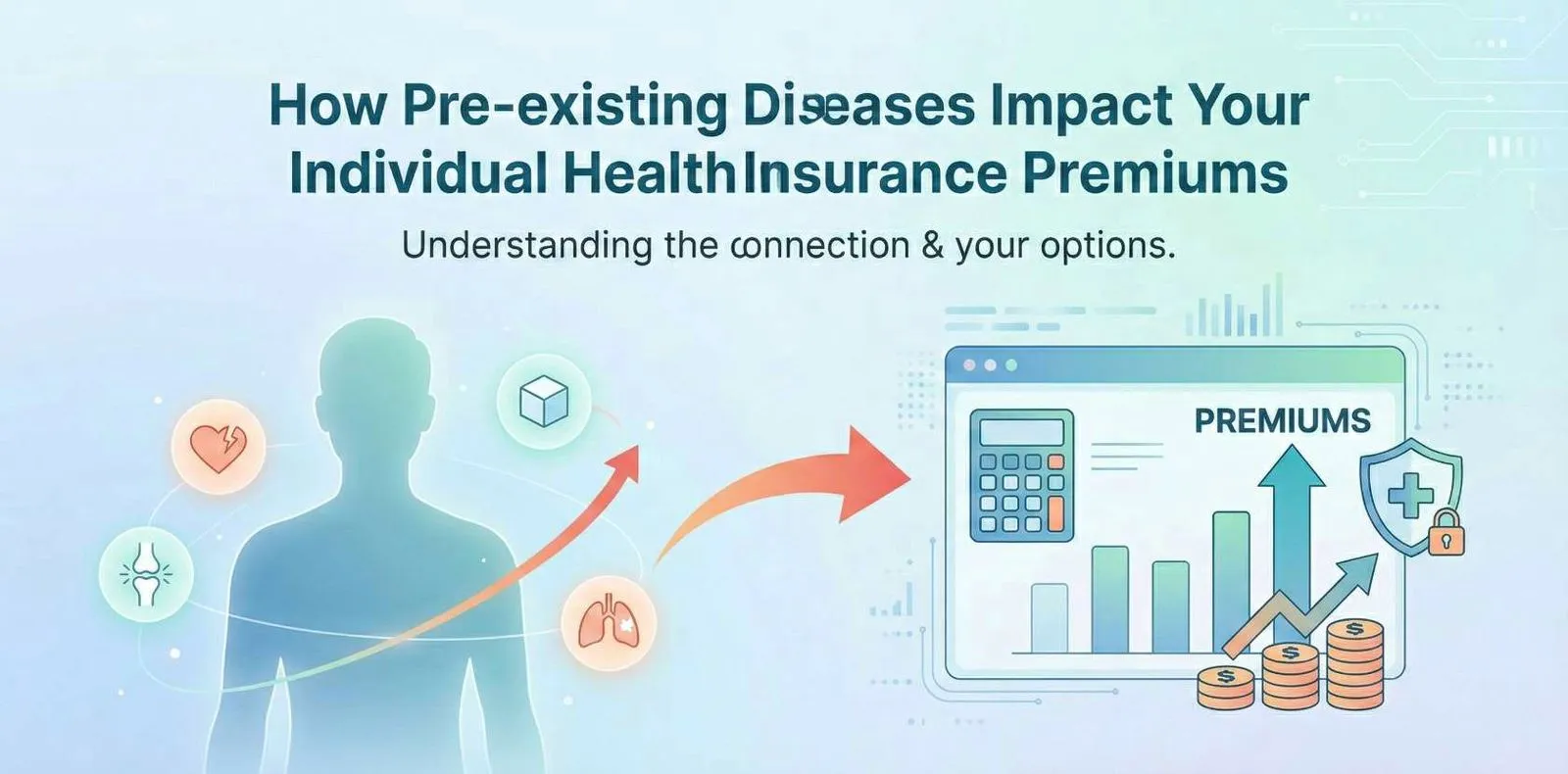
PEDs affect how much premium you pay for individual health insurance, the type of coverage you get, and the waiting period before certain coverages become active. Understanding these factors early helps you plan and choose the right policy for your needs.
Here’s how pre-existing diseases can affect your individual health insurance premiums and coverage terms.
Contents

- What are Pre-existing Diseases in Individual Health Insurance?
- How Pre-existing Diseases Affect Individual Health Insurance Premiums
- 1. High Risk of Claims with Pre-Existing Diseases
- 2. The Type of Disease can Increase the Premium
- 3. Age Combined With Pre-existing Diseases Increases the Premium
- Example: Premium Difference With and Without Pre-existing Disease
- Medical Tests Required Before Buying an Individual Health Insurance Plan
- Waiting Period for Pre-existing Diseases in Individual Health Insurance Plans
- Disclosing Medical History in Your Individual Health Insurance Application
- Can You Get Individual Health Insurance With Pre-existing Conditions?
- Tips to Lower Individual Health Insurance Premiums if You Have Pre-existing Diseases
- Conclusion – Transparency Builds Trust in Individual Health Insurance
- FAQs on Pre-existing Diseases and Individual Health Insurance
What are Pre-existing Diseases in Individual Health Insurance?
A pre-existing disease in individual health insurance refers to any medical condition you were diagnosed with in the 48 months before the policy start date, as per IRDAI guidelines. This includes chronic or long-term illnesses such as diabetes, high blood pressure, asthma, cholesterol issues, or any ailment for which you’ve taken treatment or medication.
Being transparent about these conditions is important because insurers use this information to assess risk and determine your coverage terms. If you choose not to disclose a past illness, it may affect your claim later, especially if the treatment is linked to that undisclosed condition.
Honest disclosure helps you get the right protection and ensures that your policy remains valid throughout its term.
How Pre-existing Diseases Affect Individual Health Insurance Premiums
Here's how pre-existing diseases affect individual health insurance premiums.
1. High Risk of Claims with Pre-Existing Diseases
Insurers consider pre-existing diseases as a higher health risk because there’s a greater chance you may need medical treatment in the future. To balance this risk, they may apply a loading on your premium, which increases the cost of the policy. The exact loading depends on the type of illness, how long you’ve had it, and its severity.
2. The Type of Disease can Increase the Premium
Different diseases need different types of treatment, so the type of pre-existing disease you have affects how much your premium increases. For example, a stable condition like mild thyroid disorder may cause a small increase, while diabetes or hypertension can lead to a higher premium, because they’re linked to long-term complications and may need frequent treatment. Heart-related conditions usually attract even higher loading due to their higher risk.
3. Age Combined With Pre-existing Diseases Increases the Premium
Age naturally increases the likelihood of health issues. When age is combined with an existing condition, the impact on your premium becomes stronger. For example, a 25-year-old with controlled asthma may see a smaller increase in premium, whereas a 50-year-old with diabetes may have a noticeably higher premium.
Example: Premium Difference With and Without Pre-existing Disease
For example, a healthy 30-year-old might pay around ₹10k annually for a standard individual health insurance plan. If the same person has a pre-existing condition like hypertension, the premium might rise to ₹14k due to risk-based loading. These numbers vary across insurers, but the difference helps illustrate the impact.
Medical Tests Required Before Buying an Individual Health Insurance Plan
As part of the underwriting process, insurers may request simple medical tests such as blood sugar levels, ECG, or blood pressure checks. These tests help them understand your current health status and decide the premium, waiting period, and coverage conditions. Not everyone is required to undergo tests, but they are more common when pre-existing diseases are declared.
Remember to always disclose a pre-existing disease, even if it increases the premium. If there is no disclosure, then the claim may be rejected leading to you bearing the entire treatment cost.
Waiting Period for Pre-existing Diseases in Individual Health Insurance Plans
Most individual health insurance plans include a waiting period of 2 to 4 years for pre-existing diseases. During this time, the insurer will not cover treatments directly related to your declared PED. However, unrelated illnesses or accidental injuries remain covered from day one, as per policy terms.
Example: If you have diabetes and undergo treatment for appendicitis in your first policy year, the insurer will usually cover it because it’s not linked to your pre-existing condition.
Understanding the waiting period helps you plan medical expenses better and avoid surprises during claims.
Disclosing Medical History in Your Individual Health Insurance Application
Being honest about your medical history is essential when applying for individual health insurance. Full disclosure ensures that your policy is issued with the correct terms and reduces the chances of delays or denials during claims.
Insurers may verify your information through health check-ups, past medical reports, or hospital records if needed. Sharing accurate details upfront helps the insurer assess risk fairly and offer the right coverage.
Transparency ensures fair pricing and smooth claim settlement later.
Can You Get Individual Health Insurance With Pre-existing Conditions?
Yes, you can absolutely buy individual health insurance even if you have pre-existing diseases. Most insurers offer plans that cover individuals with chronic conditions, although these policies may come with a waiting period or higher premium.
Some insurers also offer specialised plans for conditions such as diabetes or heart disease, providing wider coverage for long-term care. The key is to disclose your health condition, compare options, and purchase a plan early to reduce future risk. Pre-existing diseases do not stop you from getting insured. They simply change how your policy is priced and underwritten.
Tips to Lower Individual Health Insurance Premiums if You Have Pre-existing Diseases
If you have a pre-existing condition, there are still practical ways to manage your premium costs.
Buy your individual health insurance early to lock in lower premiums.
Maintain a healthy lifestyle with regular exercise, balanced nutrition, and timely medication.
Opt for a higher co-pay if you’re comfortable sharing a part of the treatment cost.
Renew your policy on time to avoid losing continuity benefits like waiting period credits.
Smart planning keeps premiums manageable even with medical history.
Conclusion – Transparency Builds Trust in Individual Health Insurance
When you combine honest disclosure with healthy habits, you not only reduce long-term risks but also ensure better pricing and smoother claim settlements.
Choosing the right individual health insurance policy becomes simpler when you clearly understand how pre-existing diseases affect coverage and premiums. Being upfront about your medical history helps you get fair coverage, better pricing, and worry-free claim settlements.
FAQs on Pre-existing Diseases and Individual Health Insurance
Here are some common questions and answers on pre-existing diseases and individual health insurance.

What are pre-existing diseases in individual health insurance?
Pre-existing diseases in individual health insurance are illnesses or medical conditions diagnosed in the 48 months before you buy the policy.
Do all insurers cover pre-existing diseases?
Yes, most insurers cover pre-existing diseases, but only after you complete the waiting period mentioned in the policy.
How do pre-existing diseases affect health insurance premiums?
Pre-existing diseases affect health insurance premiums by increasing them through risk-based loading because the insurer thinks that you are at a risk of higher medical expenses.
Can I buy individual health insurance with diabetes or hypertension?
Yes, you can buy individual health insurance with diabetes or hypertension. Most insurers accept applicants with these conditions, though premiums and waiting periods may vary.
What is the waiting period for pre-existing conditions?
The waiting period for pre-existing conditions is from 2 to 3 years, depending on the insurance company and the plan you choose.
Will my premium reduce once my pre-existing condition improves?
Generally, no. Premiums don’t decrease even if the condition becomes stable. Insurers price your policy based on long-term risk.
Explore More Articles on Individual Health Insurance
Explore Our Comprehensive Health Insurance Options

Recent
Articles
Family Health Insurance vs Individual Health Insurance: Key Differences
Roocha Kanade Dec 10, 2025
Why Should Every Woman Have an Individual Health Insurance Plan?
Roocha Kanade Dec 10, 2025
Advantages of Individual Health Insurance for People Aged 20 to 35
Roocha Kanade Dec 10, 2025
Top Reasons Why Individual Health Insurance Applications Get Rejected
Roocha Kanade Dec 10, 2025
How Pre-existing Diseases Impact Your Individual Health Insurance Premiums
Roocha Kanade Dec 10, 2025
All Articles


Want to post any comments?

Discover our diverse range of Health Insurance Plans tailored to meet your specific requirements🏥
✅ 100% Room Rent Covered* ✅ Zero deductions at claims ✅ 7100+ Cashless Hospitals

Check health insurance


Acko Technology & Services Private Limited
#36/5, Hustlehub One East, Somasandrapalya, 27th Main Rd, Sector 2, HSR Layout, Bengaluru, Karnataka 560102


Acko Group Companies:
Download our ACKO app now!


Products
Company
Support
Car Insurance
Bike Insurance
Health Insurance
- Health Insurance
- Health Insurance Plans
- 10 Lakhs Health Insurance
- 50 Lakhs Health Insurance
- 1 Crore Health Insurance
- Health Insurance Plans For Family
- Individual Health Insurance
- Cashless Health Insurance
- Women's Health Insurance
- Health Insurance For Parents
- Health Insurance For Senior Citizens
- Health Insurance Premium Calculator
- Waiting period in health insurance
- Health Insurance Portability
- Super Top Up Health Insurance
Group Health Insurance
Travel Insurance
CIN: U74110KA2016PTC120161
The use of images and brands are only for the purpose of indication and illustration.